
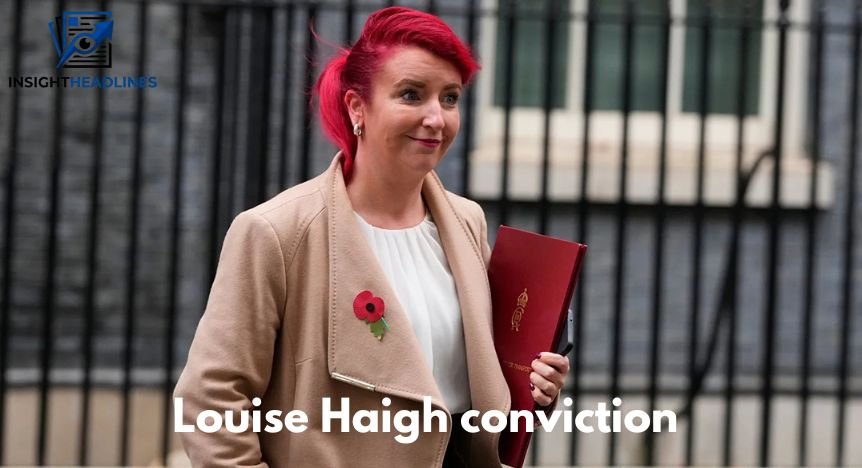
Louise Haigh conviction for fraud became a major UK political story in November 2024, when details of an offence involving a work mobile phone emerged and led to her resignation as transport secretary. But what actually happened, and why did a phone reported stolen years earlier become a matter of national political attention?
The case dates back to 2013, before Haigh became an MP. She said she had been mugged and mistakenly included her employer-issued phone among the items she believed were missing. The phone was later found, and the matter led to a police investigation and a guilty plea in court in 2014. Subsequent reporting revealed further details about the charge, the court’s decision and the financial penalty.
This article explains the timeline, the fraud offence, Haigh’s account, what court documents later clarified, why she resigned, and what her political position is now. It also separates established facts from disputed explanations, because the details matter when discussing a criminal conviction involving a public figure.
What Was Louise Haigh Convicted Of?
Louise Haigh pleaded guilty to fraud by false representation, also described in early reporting as fraud by misrepresentation. The case concerned a work-issued mobile phone belonging to her employer, the insurance company Aviva.
The incident began in 2013, when Haigh reported that she had been mugged and included her work phone on the list of belongings she believed had been stolen. She was subsequently issued with a replacement phone.
However, the original device was later found. When it was switched on, it attracted police attention and led to an investigation into the circumstances of the reported theft.
Haigh appeared before magistrates in 2014 and pleaded guilty. The conviction became public knowledge in November 2024, when she was serving as the UK’s transport secretary.
The important point is that this was not simply a case of losing a phone. The offence concerned a dishonest representation about the phone being stolen, as described in the court document later reported by The Guardian.
What Happened in the Louise Haigh Phone Case?
To understand the conviction, it helps to look at the events in chronological order.
2013: The reported mugging
Haigh said she was mugged during a night out in 2013. She reported the incident to police and provided a list of items she believed had been taken, including a mobile phone supplied by Aviva.
According to her public account, she genuinely believed the phone was missing at the time. She later discovered that the device had not actually been stolen.
The replacement phone and police investigation
In the meantime, Aviva had issued Haigh with another work phone. When the original device was switched on, it triggered police attention.
The matter was referred to the Crown Prosecution Service, and Haigh was questioned before appearing in court.
2014: The guilty plea
Haigh pleaded guilty to the offence in 2014, several months before she was elected to Parliament in 2015.
The case was handled by magistrates in London. At the time, the conviction did not become a major public political issue.
November 2024: The conviction becomes public
The story became national news on November 28, 2024. Haigh confirmed that she had pleaded guilty to an offence connected with the phone and explained that she had followed her solicitor’s advice.
The following day, she resigned as transport secretary.
January 2025: Court document reveals further details
In January 2025, The Guardian reported details from a court document that clarified the exact allegation Haigh had admitted, the financial penalty and the cost to Aviva.
This later reporting added important information to the original public account of the incident.
What Did Louise Haigh Say About the Fraud Conviction?
Haigh said the phone had been included on the stolen-items list because she believed it had been taken during the mugging.
In her November 2024 statement, she described the experience as frightening and said she had reported what she thought was missing. She explained that she discovered later that the work phone had not been stolen.
She also said her solicitor advised her not to comment during the police interview. She regretted following that advice and stated that she pleaded guilty on her solicitor’s advice, despite maintaining that the original report had been a genuine mistake and that she had made no gain from it.
There is an important distinction between Haigh’s public explanation and the wording of the court document.
Her explanation focused on an honest mistake after a mugging. The court document, as reported by The Guardian in January 2025, recorded that she admitted dishonestly making a false representation about the phone being stolen, intending to cause loss to Aviva by obtaining a replacement handset and prompting an investigation.
Both details are relevant to understanding the case. A fair account should report what she said while also acknowledging the offence to which she pleaded guilty.
What Was Louise Haigh’s Punishment?
Haigh received a discharge from the magistrates’ court. Early reports described the outcome as a conditional discharge, which she characterised as the lowest possible outcome available.
Further details emerged when The Guardian examined the court document in January 2025. It reported that Haigh was discharged for 12 months and ordered to pay:
- £100 in fines
- £85 towards the Crown Prosecution Service’s costs
- £15 as a victim surcharge
The report also stated that the replacement phone and investigation cost Aviva £1,249.
These figures help explain why the case continued to attract attention. The outcome was not a prison sentence, but it was still a criminal conviction following a guilty plea.
What Does a Conditional Discharge Mean?
A conditional discharge is a court outcome in which a person is not given an immediate punishment, provided they do not commit another offence during the specified period.
It is different from a prison sentence or a suspended prison sentence. It also should not be confused with being found not guilty.
In Haigh’s case, the court outcome was a discharge, with the later court-document reporting providing additional details about the financial payments.
Why Did Louise Haigh Resign as Transport Secretary?
Haigh resigned on November 29, 2024, after the conviction became public.
At that time, she was serving as transport secretary in Prime Minister Keir Starmer’s government. She had taken the role in July 2024 after Labour won the general election.
Her resignation came after the disclosure of the decade-old conviction. The issue raised questions about her judgement, the information available to the prime minister and whether the conviction had been properly declared during the process of joining the Cabinet.
Haigh said the controversy would distract from the government’s work and that she believed she could better support its political programme from outside government.
Her departure was significant because she had been one of the prominent figures in the new Labour administration. It also became the first major resignation from Starmer’s senior ministerial team after Labour entered government in 2024.
Did Keir Starmer Know About the Conviction?
This question became part of the political controversy.
Haigh said she had disclosed the conviction to Starmer when she joined the shadow cabinet in 2020. Reporting at the time said sources close to her maintained that he had been informed.
However, questions were raised about what had been disclosed to the government’s propriety and ethics team when she entered the Cabinet in 2024. Reports said Haigh had been asked about unspent convictions and understood that her spent conviction did not need to be declared in that process.
The distinction between telling a political leader and completing an official disclosure process became an important part of the story. They are not necessarily the same thing, and the controversy involved both the original offence and the handling of the information years later.
What Did the Court Document Reveal in 2025?
The January 2025 reporting was important because it provided more specific information about the offence than had been available in the first wave of news coverage.
According to The Guardian, the court document recorded that Haigh had admitted dishonestly representing that her work-issued mobile phone had been stolen. The stated intention was to cause loss to Aviva by obtaining a replacement iPhone 5 instead of a replacement BlackBerry and by prompting an investigation.
The document also clarified several points:
- The conviction related to one phone.
- The replacement device was an iPhone 5.
- Aviva’s reported cost for the replacement and investigation was £1,249.
- Haigh received a 12-month discharge and had to make financial payments.
This matters because early reports and public discussion sometimes referred more broadly to multiple missing phones. The court document described the specific offence involving one work phone, although the newspaper also reported that Aviva was understood to have investigated at least one other missing device internally.
A useful lesson from the timeline is that the first news report is not always the complete account. Later access to court documents can clarify the exact charge, the admitted facts and the sentence.
Is Louise Haigh’s Conviction Spent?
Yes. Reports in November 2024 said the conviction was spent.
In England and Wales, a conviction can become spent after the relevant rehabilitation period under the Rehabilitation of Offenders Act 1974. The period depends on the sentence and the rules that apply to the particular case.
A spent conviction does not mean that the conviction never happened or that the person was found innocent. It means that, for many ordinary purposes, the person is not generally required to disclose it.
There are exceptions. Certain roles and legal checks can require disclosure of spent convictions, depending on the type of position and the applicable rules.
For this reason, it is important not to use the words “spent” and “erased” as though they mean the same thing. A spent conviction can still exist in official records even when ordinary disclosure requirements no longer apply.
What Is Louise Haigh Doing Now?
Louise Haigh returned to a senior government role in July 2026.
According to her official GOV.UK biography, she was appointed First Secretary of State, Chancellor of the Duchy of Lancaster and Minister for the Cabinet Office on July 20, 2026. She had previously served as transport secretary from July 5 to November 29, 2024.
Haigh was elected as the MP for Sheffield Heeley in May 2015. Before entering Parliament, she worked as a public policy manager at Aviva and served as a special constable in the Metropolitan Police between 2009 and 2011.
Her return to a senior ministerial position is a significant development in the story. It shows that the 2024 resignation did not mark the end of her political career.
It is also important to keep the dates clear: the conviction related to an incident before she became an MP; the public controversy emerged in 2024; and her return to senior government came in 2026.
Common Misunderstandings About the Louise Haigh Conviction
Because the case involves legal terminology and political reporting, several details are often confused.
Was Louise Haigh sent to prison?
No. She received a discharge from the magistrates’ court. The later reporting on the court document also recorded financial payments.
Was she convicted in 2024?
No. The offence and guilty plea date back to 2014. The conviction became widely reported in November 2024.
Did she say she had made no mistake?
No. Haigh acknowledged that the phone had been wrongly included in the stolen-items report. Her position was that this was a genuine mistake, not a deliberate attempt to obtain a replacement.
Does a spent conviction mean someone was acquitted?
No. A spent conviction remains a conviction. The term relates to rehabilitation and disclosure rules, not to whether the original court decision was overturned.
Did the conviction end her political career?
No. She resigned as transport secretary in November 2024 but was appointed to senior government roles in July 2026.
FAQ
What was Louise Haigh convicted of?
Louise Haigh pleaded guilty to fraud by false representation, involving a work mobile phone she reported as stolen. The case began after she reported a mugging in 2013 and included the phone among the items she believed were missing. She appeared before magistrates in 2014.
When was Louise Haigh convicted of fraud?
The conviction dates back to 2014, before she became an MP. It became public knowledge in November 2024, when she was serving as transport secretary. The later publicity led to her resignation from the role.
What sentence did Louise Haigh receive?
Haigh received a discharge rather than a prison sentence. A January 2025 report based on the court document said she was discharged for 12 months and ordered to pay a £100 fine, £85 in prosecution costs and a £15 victim surcharge.
Why did Louise Haigh report her phone stolen?
Haigh said she had been mugged in 2013 and genuinely believed her work phone was among the items taken. She later discovered that the phone had not been stolen. The court document reported in 2025 recorded the dishonest false representation to Aviva to obtain a replacement handset.
Why did Louise Haigh resign from the government?
She resigned as transport secretary on November 29, 2024, after details of her conviction became public. She said the issue would distract from the government’s work and that she could better support its political programme from outside government.
Is Louise Haigh still in the UK government?
Yes. According to her official government biography, she was appointed First Secretary of State, Chancellor of the Duchy of Lancaster and Minister for the Cabinet Office on July 20, 2026.
Conclusion
Louise Haigh’s conviction for fraud concerned a work mobile phone that was reported stolen in 2013. She pleaded guilty in 2014 and received a discharge, with later court-document reporting clarifying the exact allegation and financial payments. The conviction became a major political issue in November 2024 and led to her resignation as transport secretary.
The story did not end with that resignation. Haigh returned to a senior government position in July 2026, according to her official biography.
Understanding the case means keeping three things separate: the original phone incident, the legal outcome and the later political consequences. That distinction gives readers a clearer picture than headlines alone.