
If you’ve been thinking “why do I keep getting spam calls?” you’re definitely not alone. Whether it’s your phone ringing every few hours with unknown numbers, silent calls that disconnect instantly, or repeated offers for loans you never asked for, spam calls have become a frustrating part of modern life. For many people in the UK and beyond, these calls can suddenly increase overnight, making it feel like your number has been “sold” somewhere.
The truth is, spam calling isn’t random—it’s driven by automated systems, data leaks, and large-scale calling networks that constantly test and rotate phone numbers. In some cases, the surge can happen after you sign up for a service online, enter your number on a website, or even answer just one unknown call.
In this guide, we’ll break down exactly why you’re getting these calls, why they sometimes come in back-to-back bursts, why certain countries or loan-related calls are common, and most importantly, what you can realistically do to reduce them. The goal is to help you understand what’s happening behind the scenes—not just give surface-level advice.
Why Do I Keep Getting Spam Calls?
Spam calls usually come from automated systems called “dialers” that can call thousands of numbers per minute. Your number gets added to these systems through multiple channels, often without you realizing it.
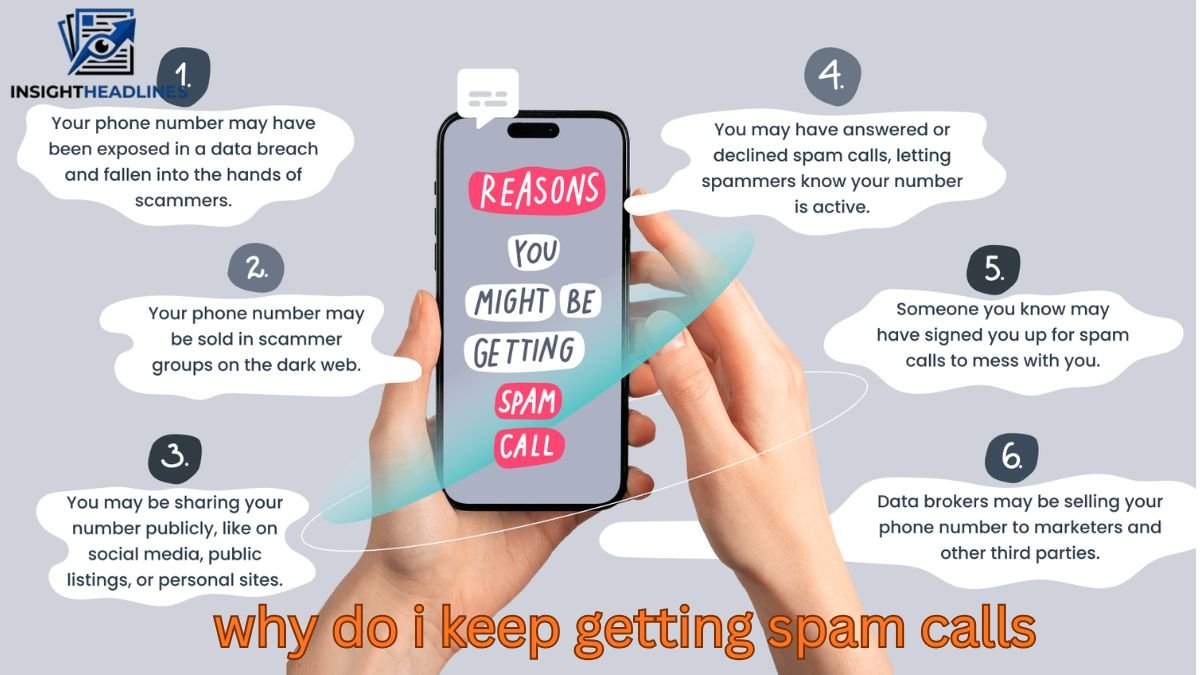
The most common reasons include:
- Your number was leaked from a website or online form
- Data brokers sold your information to marketing lists
- You answered or interacted with a spam call before
- Your number was randomly generated by auto-dialing software
- You signed up for services that share data with third parties
One of the most overlooked facts is that your number doesn’t need to be “important” to be targeted. These systems don’t pick individuals—they target bulk lists and rotate through millions of numbers.
Why Do I Keep Getting Spam Calls All of a Sudden?
A sudden spike in spam calls usually means your number has recently entered an active calling database.
This often happens due to:
1. Recent online activity
If you recently:
- Filled out a quote form (insurance, loans, energy)
- Entered your number on a shopping site
- Downloaded an app requiring phone verification
Your data may have been shared or resold.
2. New data leak exposure
Large-scale leaks from companies can expose phone numbers. Once leaked, numbers are quickly picked up by spam networks.
3. “Fresh number” targeting
Newly active numbers are often tested by scammers to see if they’re “live.” If you answer once, your number may be marked as active and resold.
Unique insight:
Many people don’t realize that spam systems run on “engagement confirmation.” Even a single answered call can signal to the system that your number belongs to an active user—making it more valuable and increasing future calls.
Why Do I Keep Getting Spam Calls About Loans?
Loan-related spam calls are extremely common because financial leads are highly profitable.
These calls usually come from:
- Lead generation companies
- Third-party brokers
- Unregulated lenders (sometimes fraudulent)
They often target people who:
- Recently searched for loans or credit cards
- Used comparison websites
- Filled out eligibility forms online
Why loans specifically?
Because financial leads can be sold multiple times. One form submission can be resold across dozens of companies.
Common pattern:
You fill out a form → your data gets sold → multiple companies call you within minutes or hours.
Why Do I Keep Getting Spam Calls From China or International Numbers?
Seeing calls from China or other international locations is usually due to:
1. Caller ID spoofing
Scammers can fake international numbers to hide their identity. The call may not actually come from China at all.
2. VoIP calling systems
Many spam networks use internet-based calling systems that route through different countries.
3. Automated global dialing networks
Some scam operations run internationally and test numbers across countries.
Important insight:
The country shown on your screen is often not the real origin. It’s usually just a “mask” used to increase the chance you pick up.
Why Do I Keep Getting Spam Calls Back to Back?
If your phone is ringing repeatedly in short bursts, this is usually not random—it’s a coordinated dialing strategy.
This happens because:
- Predictive dialers detect your number as “active”
- Multiple call centers share the same lead list
- Systems auto-redial if you don’t answer
- Scammers test response timing patterns
Unique insight (rarely discussed):
Spam systems often use “burst dialing windows.” If you engage once, your number may enter a cycle where multiple systems call you within a 10–30 minute window to maximize pickup probability.
This is why you might suddenly receive 5–10 calls in a short span.
How Your Number Ends Up on Spam Lists
Understanding how your number spreads helps you prevent future spam.
Common sources:
- Online quote forms (insurance, loans, travel)
- Social media promotions and giveaways
- Data broker websites
- Mobile apps requesting phone verification
- Publicly listed business or social profiles
Hidden factor:
Some websites include pre-checked consent boxes that legally allow data sharing with “partners,” which can include hundreds of third parties.
Why Answering Spam Calls Can Make It Worse
One of the biggest mistakes people make is answering unknown calls repeatedly.
Here’s what happens:
- You answer → system confirms your number is active
- Your number gets flagged as “high-value”
- It is sold or shared more widely
- You receive more frequent calls
Even rejecting or hanging up quickly can still signal activity in some systems.
Practical Ways to Reduce Spam Calls
You can’t eliminate spam calls completely, but you can significantly reduce them.
1. Block and report consistently
Block numbers immediately after receiving them. While spoofed numbers change, this helps reduce repeat patterns.
2. Use built-in spam filters
Most smartphones now include:
- Spam detection
- Unknown caller filtering
- Silence unknown numbers feature
3. Avoid engaging with unknown calls
Do not press any buttons or respond verbally.
4. Limit where you share your number
Be selective with:
- Online forms
- Promotions
- App registrations
5. Register with UK opt-out services (if applicable)
In the UK, services like TPS (Telephone Preference Service) can reduce legitimate marketing calls.
Common Mistakes People Make
- Answering “just to check”
- Calling back missed unknown numbers
- Sharing numbers on multiple websites for discounts
- Trusting “unsubscribe” options in scam SMS or calls
- Assuming all spam calls are human (many are bots)
Why Spam Calls Are Getting Worse Globally
There are three major trends driving the increase:
1. Cheap calling technology
VoIP systems allow mass calling at almost no cost.
2. Data brokerage industry growth
Phone numbers are treated as marketable data.
3. AI-driven dialing systems
Modern systems optimize call timing, increasing pickup rates.
A Real-World Scenario
Imagine you apply for an online loan comparison tool. Within minutes:
- Your data is shared with multiple lenders
- Each lender uses automated dialers
- You receive 5–10 calls in an hour
- If you answer one, your number becomes “verified active”
This is why spam calls often feel sudden and overwhelming.
FAQ
Why do I keep getting spam calls even after blocking numbers?
Because most spam systems use rotating or spoofed numbers. Blocking helps, but the source system generates new numbers constantly, so it doesn’t fully stop the calls.
Why do spam calls stop for a while and then start again?
Spam activity often runs in cycles. Your number may temporarily drop off active lists, then be re-added through data sharing or system updates.
Why do I keep getting spam calls but no one speaks?
These are usually automated “ping” calls designed to check if a number is active. If you answer, the system confirms your number is real.
Why am I getting more spam calls after answering one?
Answering signals engagement. Your number is then considered valuable and may be distributed across more spam networks.
Can spam calls be dangerous?
Yes, some are scams designed to steal personal information or financial details. Always avoid sharing any personal data over unsolicited calls.
How long does it take to stop spam calls?
It depends on exposure. With consistent blocking and reduced engagement, most people see improvement within a few weeks, but some level of spam may continue.
Conclusion
Spam calls are not random—they are the result of large automated systems, data sharing practices, and aggressive marketing networks. Whether you’re getting loan offers, international calls, or sudden back-to-back ringing, the underlying cause is usually the same: your number is circulating in active calling databases.
The key to reducing spam is understanding how your number gets flagged and avoiding actions that confirm it is active. While you can’t eliminate every call, you can significantly reduce them by controlling where your number appears and how you respond.
Staying aware of these patterns helps you regain control of your phone—and your peace of mind.