
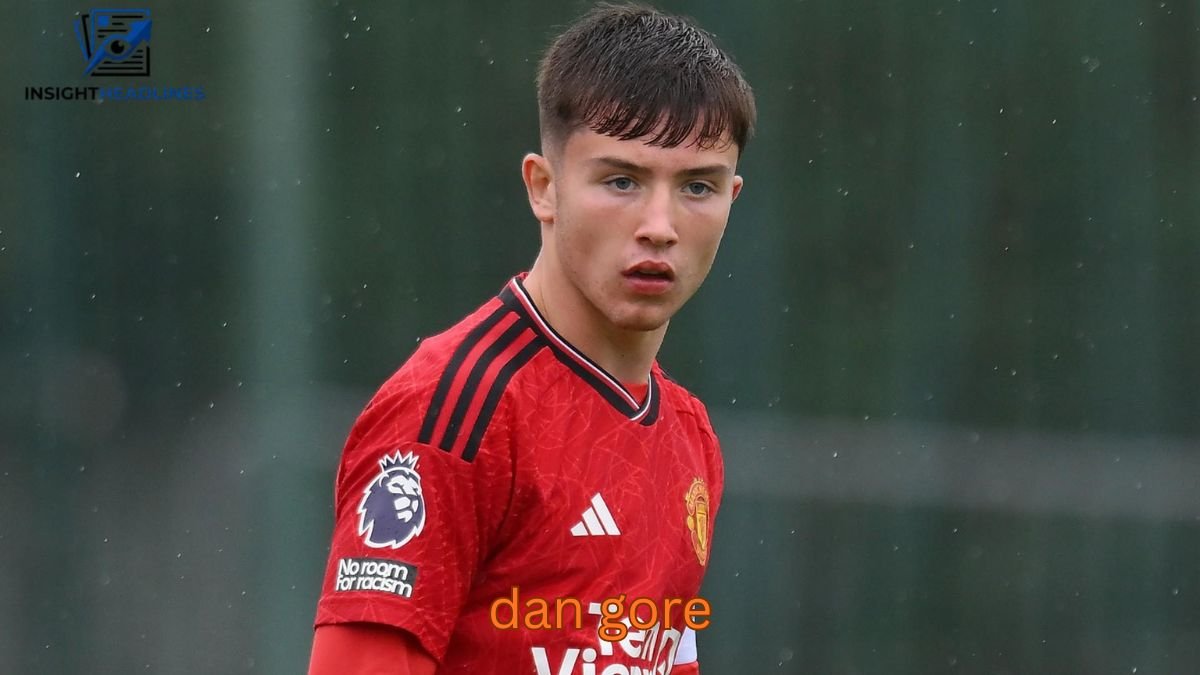
When fans search for Dan Gore stats or try to understand his progress at Manchester United, they’re usually looking for more than numbers—they want context. Is he really one of the next midfield talents coming through the academy? What does his loan spell at Rotherham United actually mean for his development? And most importantly, can he realistically break into the first team at Old Trafford?
Dan Gore is one of those young players who quietly builds attention without constant headlines. His journey hasn’t been about instant fame or flashy statistics, but about steady development, tactical learning, and adapting to the physical demands of senior football.
This article breaks down his career at Manchester United, his loan experience, playing style, development path, and what his future could realistically look like. Instead of just repeating surface-level facts, we’ll look at how his minutes, loan decisions, and injuries have shaped his progress—and what that tells us about his long-term potential in elite football.
Who Is Dan Gore? Manchester United Academy Profile
Dan Gore is a central midfielder developed in the Manchester United academy system. He has been part of a generation of youth players who were trained in a system that emphasizes technical control, pressing intelligence, and positional awareness.
At Manchester United, youth midfielders are rarely judged only on flair. They are assessed on:
- Press resistance under pressure
- Passing security in tight spaces
- Tactical discipline in transitions
- Physical readiness for Premier League intensity
Gore fits this profile as a hardworking, intelligent midfielder who operates best in central areas, often as a No. 6 or No. 8 depending on the system.
Key Development Path
- Progressed through Manchester United youth ranks
- Featured in youth competitions and academy Premier League matches
- Trained regularly with senior squad environments
- Loaned out for first-team experience in competitive league football
His development has followed a structured pathway designed to bridge academy football with senior-level intensity.
Dan Gore Stats: What the Numbers Really Show
When people search for Dan Gore stats, they often expect goals and assists. But for central midfielders—especially development-stage players—stats tell a different story.
Gore’s statistical profile is more about involvement than output:
What His Stats Usually Reflect
- Limited senior competitive appearances so far
- More minutes in youth and loan matches than Premier League games
- Low goal contribution (not his primary role)
- Higher focus on passing, ball recovery, and pressing actions
Why His Stats Can Be Misleading
A common mistake in evaluating young midfielders is expecting attacking numbers similar to forwards. Gore’s role is more structural:
- He helps progression from defence to attack
- He maintains midfield balance
- He presses and disrupts opposition build-up
- He provides short passing stability
Unique Insight #1:
Players like Gore often show their real value in “invisible metrics”—press recovery speed, spacing discipline, and ball circulation tempo. These are rarely highlighted in mainstream stat sheets but heavily tracked by coaching staff.
Manchester United Development Path
At Manchester United, midfield development is extremely competitive. Breaking into the first team requires not only talent but timing, squad needs, and physical readiness.
Where Gore Fits in United’s System
Dan Gore has primarily been used as:
- A central midfield rotation option in youth squads
- A tactical midfielder in possession-based systems
- A pressing midfielder in high-intensity setups
Manchester United’s senior midfield has experienced strong competition, which makes opportunities for academy graduates more limited. This is why loan spells become crucial.
Why United Loan Players Like Gore
The club typically sends young midfielders out to:
- Experience physical leagues (EFL Championship or League One)
- Improve decision-making under pressure
- Adapt to weekly competitive football
- Build resilience through consistent match exposure
Dan Gore Man Utd Role Explained
At Manchester United, Gore is not being developed as a star attacker but as a system midfielder.
His Core Role Traits
- Drops deep to help build-up play
- Presses aggressively after losing possession
- Supports transitions from defence to attack
- Plays simple, high-percentage passes
He is not expected to dominate games statistically at this stage, but rather to understand structure and tempo.
Unique Insight #2:
Manchester United’s modern academy midfielders are now trained with “phase responsibility roles.” This means Gore isn’t just learning one position—he’s being trained to understand how midfield behaves differently in build-up, transition, and defensive phases. This is why his progress may seem slow externally but is actually layered internally.
Rotherham United Loan: Why It Matters
One of the most important steps in his career has been his loan move to Rotherham United.
This kind of move is not just about playing time—it’s about testing readiness in a physically demanding environment.
What the Loan Was Designed For
- Exposure to senior-level physicality
- Regular competitive minutes
- Faster decision-making under pressure
- Learning to handle aggressive midfield battles
Rotherham Playing Style Impact
Rotherham traditionally plays a direct, physical style of football. For a technical midfielder like Gore, this creates challenges:
- Faster pressing pressure than academy games
- Less time on the ball
- More aerial and second-ball duels
- Higher defensive workload
This environment forces adaptation.
Rotherham Loan Update: Development Reality
In early loan spells like this, progress is not always linear. Young midfielders often face:
- Rotational selection
- Tactical adjustment periods
- Physical adaptation challenges
- Competition with experienced senior players
For Gore, the loan experience is less about instant success and more about learning survival skills in professional football.
Unique Insight #3:
Clubs like Manchester United don’t evaluate loan success purely on minutes played. They assess “adaptation curves”—how quickly a player responds to setbacks, physical duels, and tactical instructions. Even short substitute appearances can be highly valuable if the learning curve is strong.
Dan Gore Transfer Rumours & Future Path
Whenever a young Manchester United player goes on loan, transfer speculation naturally increases.
Possible Future Scenarios
- Return to Manchester United squad rotation
If development goes well, he could become a backup option in domestic cup games. - Second loan move (higher division)
A step up to a stronger Championship side is a common next phase. - Permanent transfer (less likely early on)
Only happens if pathway at United becomes blocked.
At this stage, the most realistic path is continued development through loans rather than immediate transfer movement.
Playing Style Breakdown
Strengths
- Intelligent positioning
- Quick short passing
- Good defensive awareness
- Strong work rate
- Tactical discipline
Areas for Improvement
- Physical strength for senior midfield battles
- Consistency over 90 minutes
- Attacking output (goals/assists)
- Speed of decision-making under pressure
Tactical Fit
He is best suited for:
- Double pivot systems
- High pressing midfields
- Possession-based teams
- Structured tactical setups
Common Mistakes Fans Make When Judging Him
Many young players are judged too quickly based on incomplete data.
Mistake 1: Expecting attacking stats
Gore is not an attacking midfielder.
Mistake 2: Judging loan success by headlines
Loan success is often invisible in stats.
Mistake 3: Comparing him to established stars
His development stage is still early professional transition.
Why Manchester United Rate Him
Despite limited senior exposure, his continued inclusion in development pathways suggests trust from coaching staff.
Key reasons:
- Tactical intelligence
- Professional attitude
- Adaptability in training environments
- Consistency in academy performances
Future Outlook
Dan Gore is still in the early phase of his professional journey. His next 12–24 months will be critical in determining whether he becomes:
- A Premier League squad midfielder
- A long-term Championship player
- Or a rotational professional across leagues
The key factor will not just be talent—but adaptation speed in senior football environments.
FAQ: Dan Gore Stats & Career
1. What are Dan Gore’s stats so far?
Dan Gore’s stats mainly include youth and loan appearances rather than extensive Premier League matches. His role is more focused on midfield structure than goal contributions. He has limited senior-level statistical output at this stage of his career.
2. Is Dan Gore playing for Manchester United?
He is still officially a Manchester United player but has spent time on loan for development. His involvement with the first team is limited, mainly focused on training and future integration pathways.
3. Why did Dan Gore go on loan to Rotherham?
The loan to Rotherham United was designed to give him experience in senior competitive football. It helps him adapt to physicality, pace, and weekly match pressure.
4. What position does Dan Gore play?
He plays primarily as a central midfielder. He can operate as a defensive midfielder or box-to-box player depending on tactical needs.
5. Could Dan Gore return to Manchester United’s first team?
Yes, but it depends on his development during loan spells and competition within the squad. Continued progress could earn him rotational opportunities in domestic competitions.
6. Is Dan Gore expected to transfer permanently?
There is no confirmed indication of a permanent transfer. His current pathway still aligns with Manchester United development planning.
Conclusion
Dan Gore’s career is still in its early but important stage. Instead of dramatic headlines or flashy stats, his journey is built on structured development, loan experience, and tactical education within elite football systems.
His time at Manchester United and Rotherham United shows a clear strategy: prepare him for the demands of senior football step by step. Whether he becomes a first-team regular or develops elsewhere, his foundation is being built through real match experience rather than hype.
For fans tracking his progress, the key takeaway is simple—his story is still unfolding, and the next phase will be the most important yet.