
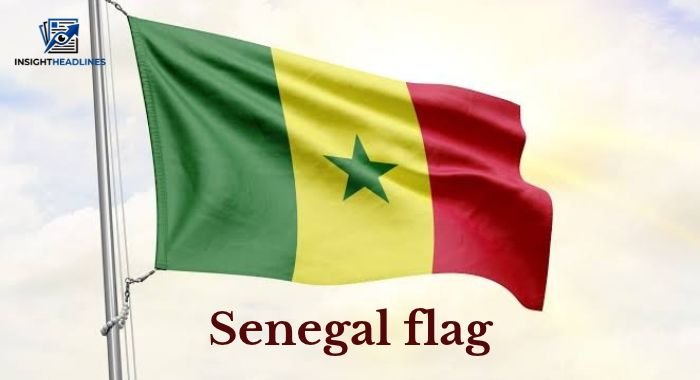
The Senegal flag is easy to recognise once you know what to look for: three equal vertical stripes in green, yellow and red, with a small green star in the centre. However, people often confuse it with the flags of other African countries, particularly Cameroon and Mali. Others search for the meaning of its five-pointed star, whether the stripes are horizontal or vertical, or how to find the correct Senegal flag emoji.
The design is more than a combination of colours. Each element has a national meaning connected with Senegal’s identity, beliefs, independence and hopes for the future. Its star also has a distinctive interpretation: its five points represent the country’s openness to the five continents.
This guide explains what the Senegal flag looks like, what its colours represent and why the star matters. It also compares the flag with similar designs, explains its historical background and answers common questions about the emoji, French influence and unusual searches such as Senegal flag toilet paper.
What Does the Senegal Flag Look Like?
The national flag of Senegal is a rectangular tricolour made up of three equal vertical bands:
- Green: The stripe on the left, next to the flagpole.
- Yellow (gold): The stripe in the middle.
- Red: The stripe on the right.
- Green star: A five-pointed star positioned in the centre of the yellow band.
The arrangement is important. When the flag is displayed in its normal upright position, the colours run from left to right in the order green, yellow and red. The star sits in the middle of the yellow section rather than towards the flagpole.
Senegal’s Constitution officially describes the national flag as three equal vertical bands of green, gold and red, with a green five-pointed star in the centre of the gold band.
The design is simple, but the combination of colours and the central star makes it distinctive.
Senegal Flag Meaning: What Do the Colours Represent?
Each colour has a particular meaning in Senegalese national symbolism. The country’s official explanation connects the colours with religion, hope, prosperity, work, sacrifice and determination.
1. Green: Hope and Spiritual Values
Green is the first colour on the Senegal flag. It carries religious and cultural significance.
According to Senegal’s official explanation:
- For Muslims, green is associated with the flag of the Prophet.
- For Christians, it represents hope.
- For followers of traditional animist beliefs, it symbolises fertility.
Green also communicates hope and the aspirations of a young independent nation. Its meaning is particularly interesting because it brings together different religious and cultural interpretations within one national symbol.
2. Yellow or Gold: Wealth, Work and Knowledge
The middle stripe is yellow, officially described as gold in the constitutional wording.
It represents wealth and the results of national effort. The colour reflects Senegal’s ambition to improve economic conditions and build a stronger society through the work of its people.
Gold also has an intellectual and cultural meaning. Senegal’s official explanation associates it with the arts, literature and the spirit.
This makes yellow more than a decorative colour. It represents both material development and the importance of education and culture.
3. Red: Sacrifice and Determination
Red is the stripe on the right side of the flag.
It recalls blood and life, symbolising the sacrifices made by the nation. It also represents the determination, courage and strength of the Senegalese people in their efforts to overcome underdevelopment.
The colour therefore connects the country’s past struggles with its ambitions for the future.
What Does the Senegal Flag Star Mean?
The green star is one of the most recognisable features of the national flag. It has five points and is placed in the centre of the yellow stripe.
Its meaning is especially significant because it represents Senegal’s openness to the five continents.
Does the Star Represent the Five Continents?
Yes. Senegal’s official explanation states that the five points mark the country’s openness to the five continents.
The star also represents the sky and spiritual values. Its green colour reinforces the symbolism of hope associated with Senegal’s independence.
There is another interesting detail: the star is not simply an extra decoration added to make the flag distinctive. Its position and colour connect it directly with the meanings of the surrounding stripes.
The five-pointed design communicates an outward-looking national identity, while its central position gives it a clear place in the overall composition.
Is the Senegal Flag Horizontal or Vertical?
The Senegal flag is officially a vertical tricolour, not a horizontal one.
This is a common source of confusion when people search for a Senegal flag with horizontal stripes. Some flag designs use three horizontal bands, but Senegal’s national flag uses three vertical bands.
To remember the correct arrangement:
- Place green on the left.
- Put yellow in the middle.
- Place red on the right.
- Add a green five-pointed star in the centre of the yellow stripe.
A flag may be displayed at different angles or reproduced in a rotated format, but that does not change its official design. The stripes remain equal in width, and the star belongs in the central yellow band.
History of the Senegal Flag
Senegal’s current flag dates from 1960, the year the country gained independence from France.
Before independence, Senegal was part of the Mali Federation, a short-lived political union involving Senegal and the French Sudan, which later became Mali. The federation had its own flag, using green, yellow and red with a distinctive black Kanaga symbol.
When the federation dissolved in 1960 and Senegal became an independent republic, the country adopted its own national flag. The new design retained the familiar Pan-African colours but replaced the earlier central symbol with a green five-pointed star.
This historical connection helps explain why Senegal’s flag resembles the flag of Mali. The two designs share an important part of their history rather than being coincidentally similar.
Senegal’s independence is an important part of the flag’s identity. The colours and star represent a country establishing its own national character while remaining connected to wider African ideals.
Senegal Flag vs Cameroon Flag: What Is the Difference?
The Senegal and Cameroon flags are easy to confuse because both use green, yellow and red vertical stripes with a central star.
However, there are clear differences.
| Feature | Senegal | Cameroon |
|---|---|---|
| First stripe | Green | Green |
| Middle stripe | Yellow | Red |
| Last stripe | Red | Yellow |
| Star colour | Green | Yellow |
| Star position | Centre of yellow stripe | Centre of red stripe |
| Star points | Five | Five |
The easiest way to distinguish them is to look at the middle stripe.
Senegal has a yellow centre stripe with a green star. Cameroon has a red centre stripe with a yellow star.
This is a useful distinction when identifying flags in international football, school assignments or country quizzes.
Senegal Flag vs Ghana Flag
The Senegal and Ghana flags both use green, yellow and red, but their layouts are different.
Ghana’s flag has three horizontal stripes:
- Red at the top.
- Yellow in the middle.
- Green at the bottom.
A black five-pointed star appears in the centre of Ghana’s yellow stripe.
Senegal’s flag, by contrast, has vertical green, yellow and red stripes, with a green star in the middle.
The star colour and stripe direction are the quickest ways to tell the two flags apart. Ghana uses a black star and horizontal stripes, while Senegal uses a green star and vertical stripes.
Senegal Flag vs Mali Flag
Senegal and Mali have particularly similar flags because both use the same three Pan-African colours in the same order.
Both have vertical green, yellow and red stripes. The main difference is that Senegal has a green five-pointed star in the centre of its yellow stripe, while Mali’s national flag has no star or other central symbol.
This difference makes identification straightforward once you know to look at the middle stripe.
Senegal Flag Emoji: 🇸🇳
The Senegal flag emoji is 🇸🇳.
It is the digital flag symbol used to represent Senegal in messages, social media posts, websites and other online content.
The emoji is created using two regional indicator letters:
- S represents the first letter of Senegal’s country code.
- N represents the second letter.
Together, they form the flag emoji 🇸🇳 on platforms that support national flag emojis.
You can copy and use it in different contexts:
- Social media captions: Celebrating Senegal 🇸🇳
- Football discussions: Senegal national team 🇸🇳
- Travel posts: Exploring Senegal 🇸🇳
- Country-related messages: Dakar, Senegal 🇸🇳
One practical point: the appearance of the emoji can vary slightly between devices and platforms. Some systems display a detailed flag, while others use a simpler design. The underlying country identification remains the same.
What Does the French Senegal Flag Mean?
Searches for a French Senegal flag can refer to two different things: Senegal’s national flag and the historical relationship between Senegal and France.
Senegal was formerly under French colonial rule and became independent in 1960. French is still the country’s official language, and the historical connection remains part of its national history.
However, the Senegal flag is not simply the French flag with different colours.
France’s national flag has three vertical stripes in blue, white and red. Senegal’s flag uses green, yellow and red, with a green star in the central stripe.
The Senegalese design represents an independent country with its own national identity. Its colours are also associated with the wider Pan-African movement.
Therefore, the phrase French Senegal flag should not be treated as the name of a separate official national flag. The recognised national flag is the green, yellow and red tricolour with the central green star.
Why Do People Search for Senegal Flag Toilet Paper or Toilet Roll?
Searches such as Senegal flag toilet paper and Senegal flag toilet roll are different from the usual questions about national symbols.
These phrases may refer to novelty products, printed paper designs, decorative merchandise or a particular online listing. They do not describe an official part of Senegal’s national identity.
There is no official Senegalese national symbol called a toilet-paper flag. The recognised flag remains the three-colour vertical design with the green star.
If you are searching for a product, it is worth checking the actual product description and seller rather than assuming that a search phrase refers to an official item or national tradition.
It is also important to treat national flags respectfully. A flag represents a country’s people and identity, so products using national symbols can be culturally sensitive depending on their design and intended use.
Common Mistakes When Identifying the Senegal Flag
Even though the design is straightforward, a few mistakes occur regularly.
1. Confusing vertical and horizontal stripes
Senegal’s flag has vertical stripes. Ghana’s flag is a useful comparison because it has horizontal stripes.
2. Putting the star in the wrong place
The green star belongs in the centre of the yellow stripe. It is not positioned in the green or red stripe.
3. Using the wrong star colour
Senegal has a green star. Cameroon has a yellow star, while Ghana has a black one.
4. Confusing Senegal with Mali
Both countries use vertical green, yellow and red stripes. The green star is the main feature that distinguishes Senegal’s flag.
5. Calling it the French flag
Senegal has historical connections with France, but its national flag is different from the blue, white and red French tricolour.
FAQ
What is the Senegal flag?
The Senegal flag is a national flag made up of three equal vertical stripes: green, yellow and red. A green five-pointed star appears in the centre of the yellow stripe. It represents Senegal’s national identity and its history as an independent African country.
What do the five points on the Senegal flag represent?
The five points of the green star represent Senegal’s openness to the five continents. The star also symbolises the sky and spiritual values. Its green colour is associated with hope and the country’s independence.
Why does the Senegal flag have green, yellow and red colours?
The colours have religious, cultural and national meanings. Green represents hope and has significance in different religious traditions, yellow symbolises wealth, work and knowledge, and red recalls sacrifice and determination. Together, they communicate important aspects of Senegalese identity.
Is the Senegal flag the same as the Cameroon flag?
No. Both flags have vertical green, yellow and red stripes and a central five-pointed star, but their colour arrangements differ. Senegal has a yellow middle stripe with a green star, while Cameroon has a red middle stripe with a yellow star.
What is the Senegal flag emoji?
The Senegal flag emoji is 🇸🇳. It is used in social media posts, messages and online content to represent Senegal. Its appearance can vary slightly depending on the device or platform.
When was the Senegal flag adopted?
Senegal adopted its current national flag in 1960, following the dissolution of the Mali Federation and the country’s move to independence. It retained the green, yellow and red Pan-African colours but used a green five-pointed star as its central symbol.
Conclusion
The Senegal flag is a distinctive national symbol made up of three vertical stripes in green, yellow and red, with a green five-pointed star in the centre. Its colours represent hope, religious and cultural values, wealth, work, sacrifice and determination. The star has a particularly meaningful role, marking Senegal’s openness to the five continents.
Understanding the arrangement also makes it easier to distinguish Senegal’s flag from those of Cameroon, Ghana and Mali. Whether you are identifying the flag for a school project, a country quiz, a football discussion or an online post, the central green star on the yellow stripe is the detail to remember