
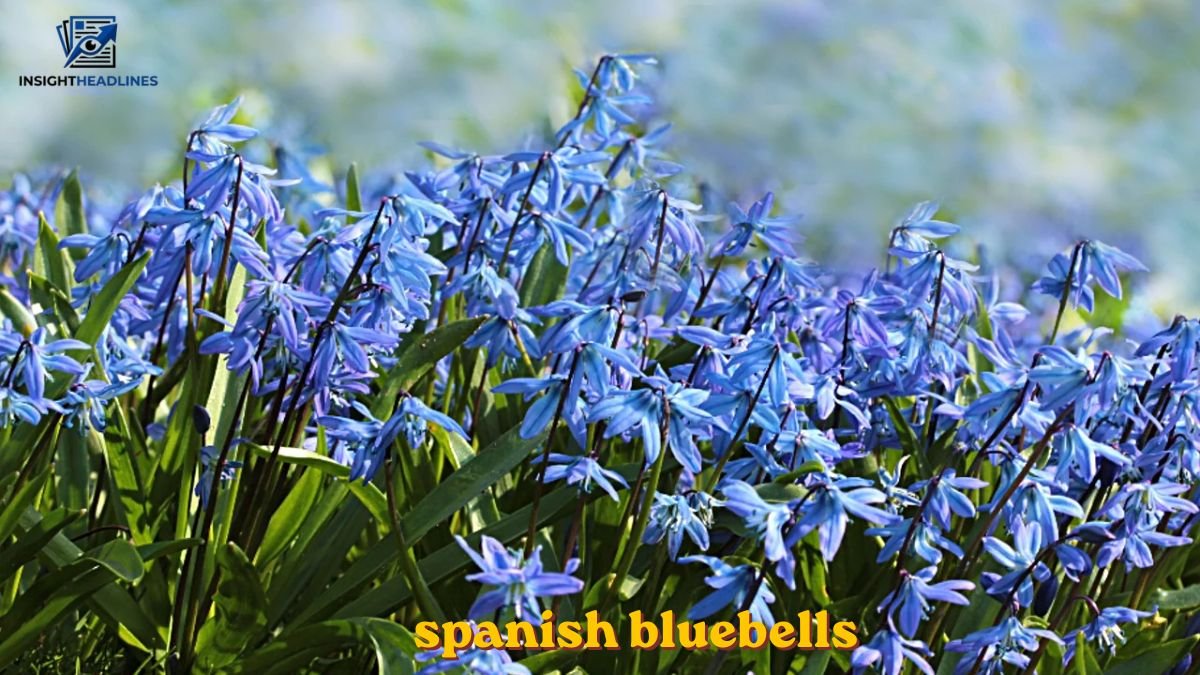
If you’ve ever walked through a woodland in spring and noticed a carpet of blue flowers, you’ve probably seen bluebells—but not all bluebells are the same. The confusion between the Spanish bluebell and the native English bluebell is very common, especially for gardeners trying to manage or design a natural-looking garden. The problem is that these two plants look similar at first glance, but behave very differently in real life.
Understanding spanish bluebells (Spanish bluebell) versus english bluebells (English bluebell) is important because one is a beloved native wildflower, while the other can become invasive and dominate garden spaces. Many gardeners only realize the difference after Spanish bluebells start spreading aggressively, pushing out the delicate native species.
This article breaks down everything you need to know in simple terms: how to tell them apart, which one is better for your garden, why Spanish bluebells spread so quickly, and most importantly, how to control or remove them if they take over. You’ll also get real-world gardening insights that go beyond basic advice, so you can confidently manage bluebells in your own space.
What Are Spanish Bluebells?
Spanish bluebells are a bulb-forming perennial originally from the Iberian Peninsula. They were introduced to the UK and other parts of Europe as ornamental plants because they are hardy, fast-growing, and visually attractive.
In gardens, they often look like a “stronger” version of the English bluebell. They produce thicker stems, upright flower spikes, and a wider range of colors including pale pink and white.
Key characteristics:
- Upright, stiff flower stems
- Flowers arranged all around the stem (not just one side)
- Broad, glossy leaves
- Strong spreading habit through bulbs and seeds
- More color variation (blue, pink, white)
The biggest issue with Spanish bluebells is their ability to hybridize with native bluebells, creating mixed plants that dilute the genetic identity of wild populations.
What Are English Bluebells?
English bluebells are the traditional native wildflower found in ancient woodlands. They are more delicate, with a graceful drooping flower structure and a strong sweet scent.
They have evolved over thousands of years to thrive in shaded woodland environments and are an important part of local biodiversity.
Key characteristics:
- Drooping flower heads all on one side of the stem
- Strong fragrance
- Narrow, matte green leaves
- Deep violet-blue color (rarely pink or white)
- Slower spreading habit
Unlike Spanish bluebells, English bluebells are more sensitive to disturbance and take longer to establish—but they create stunning natural carpets when left undisturbed.
English vs Spanish Bluebells: The Real Differences
Many people struggle to tell them apart until they grow side by side. Once you know what to look for, the differences become very clear.
1. Flower Shape and Position
- English bluebells: flowers hang on one side, creating a curved “droop”
- Spanish bluebells: flowers grow all around the stem in a star-like pattern
2. Strength and Growth Habit
- English: soft, flexible stems; slow spread
- Spanish: upright, rigid stems; fast spread
3. Scent
- English bluebells have a strong sweet scent, especially in the morning
- Spanish bluebells are usually scentless or very faint
4. Leaves
- English: narrow and dull green
- Spanish: wider, thicker, and glossy
5. Habitat Behavior
- English bluebells prefer woodland floors and semi-shade
- Spanish bluebells adapt easily to gardens, grass, and disturbed soil
6. Hybrid Risk (Important Insight)
One of the most overlooked facts is that Spanish bluebells don’t just compete—they hybridize. This means even if both types are present, over time you may end up with mixed plants that no longer resemble true English bluebells.
This is one reason conservationists are concerned about uncontrolled spread.
Why Spanish Bluebells Spread So Aggressively
From real gardening experience, Spanish bluebells behave differently from most ornamental bulbs. Once planted, they rarely stay contained.
Main reasons for fast spread:
- Bulbs multiply underground every season
- Seeds are easily carried by wind and soil movement
- They tolerate a wide range of soil types
- They survive disturbance better than native bluebells
Real-world scenario:
Many gardeners plant a few Spanish bluebells for color and forget about them. Within 3–5 years, they can appear in lawns, under hedges, and even in vegetable beds.
The biggest mistake is assuming they behave like tulips or daffodils—they don’t.
English Bluebells vs Spanish Bluebells in Gardens
Choosing between them depends on your goal.
English Bluebells are best if:
- You want a natural, woodland-style garden
- You care about native biodiversity
- You prefer slower, controlled spread
Spanish Bluebells are best if:
- You want bold, fast color coverage
- You have a difficult soil area
- You don’t mind managing spread regularly
Important insight:
A common mistake is mixing both species in the same garden. This often leads to hybridization, which reduces the purity and beauty of English bluebells over time.
How to Get Rid of Spanish Bluebells
If Spanish bluebells are taking over your garden, removal requires patience. They are not easy to eliminate in one season.
Step-by-step approach:
1. Digging Out Bulbs
- Remove plants after flowering when leaves are still visible
- Dig deep (bulbs can sit 10–15 cm underground)
- Sift soil carefully to remove small bulb offsets
2. Repeated Removal (Most Important)
Even small bulb fragments can regrow. You will need to check the same area for multiple seasons.
3. Avoid Cutting Alone
Cutting leaves without removing bulbs only weakens them slightly—they will return.
4. Smothering Method
In heavily infested areas:
- Cover soil with thick mulch or cardboard
- Block sunlight for 1–2 growing seasons
5. Lawn Management Trick
If they appear in grass:
- Regular mowing weakens them over time
- Combine mowing with digging for best results
Common mistake:
Leaving dug-out soil on site. Even tiny bulb pieces can re-establish.
Practical Gardening Tips from Real Experience
Here are insights that most guides don’t mention:
1. Watch for “silent spread”
Spanish bluebells often spread underground before appearing above soil. You may think they are gone, but they are still expanding below the surface.
2. Hybrid zones are hard to reverse
Once hybrid bluebells appear, it is extremely difficult to restore pure English bluebells without complete soil replacement or long-term removal.
3. Timing matters
Late spring (after flowering) is the most effective time to control them because energy is moving back into the bulbs.
4. Disturbed soil increases spread
Construction, digging, or even frequent replanting helps Spanish bluebells expand faster than English ones.
Common Mistakes Gardeners Make
- Planting Spanish bluebells without checking spread potential
- Assuming all bluebells in the UK are native
- Not removing bulbs fully during control efforts
- Mixing bluebell types in woodland-style gardens
- Ignoring early signs of hybrid plants
Are Spanish Bluebells Always “Bad”?
Not necessarily. In controlled garden spaces, they can be attractive and reliable bloomers. The issue arises when they escape boundaries or mix with native populations.
Think of them as a “vigorous ornamental”—beautiful, but demanding management.
FAQ: Spanish Bluebells vs English Bluebells
1. How can I tell Spanish and English bluebells apart quickly?
Look at the flowers. English bluebells droop on one side of the stem and smell sweet. Spanish bluebells stand upright with flowers around the stem and usually have no scent.
2. Are Spanish bluebells invasive?
Yes, in many garden and woodland settings they can become invasive because they spread quickly and compete with native bluebells.
3. Can Spanish and English bluebells grow together?
They can, but it is not recommended. They often hybridize, which reduces the purity of native bluebells over time.
4. What is the best way to permanently remove Spanish bluebells?
Complete removal requires digging out bulbs and repeated follow-up for several seasons. Smothering and lawn mowing can help control regrowth.
5. Do Spanish bluebells come back every year?
Yes, they are perennial bulbs and will return annually unless fully removed.
6. Why are English bluebells protected in some areas?
Because they are native wildflowers that support biodiversity and are declining due to habitat loss and hybridization.
Conclusion
Understanding the difference between English and Spanish bluebells is more than just plant identification—it’s about protecting garden balance and native ecosystems. Spanish bluebells are strong, fast-spreading, and visually appealing, but they can easily overwhelm delicate English bluebells if left unmanaged.
If you want a natural woodland feel, English bluebells are the better long-term choice. If you already have Spanish bluebells, the key is consistent control rather than one-time removal. With the right approach, both can be managed effectively, but awareness is what makes the difference.
A garden stays healthy when you understand what is growing in it—not just what looks pretty in spring.